Jaehyeok Shim (재혁 심)
Education

Ulsan National Institute for Science and Technology (UNIST)
Ulsan National Institute for Science and Technology (UNIST)

Seoul National University for Science and Technology (Seoultech)
Experience

Adobe
Ulsan National Institute for Science and Technology (UNIST)
Seoul National University for Science and Technology (Seoultech)
Publications
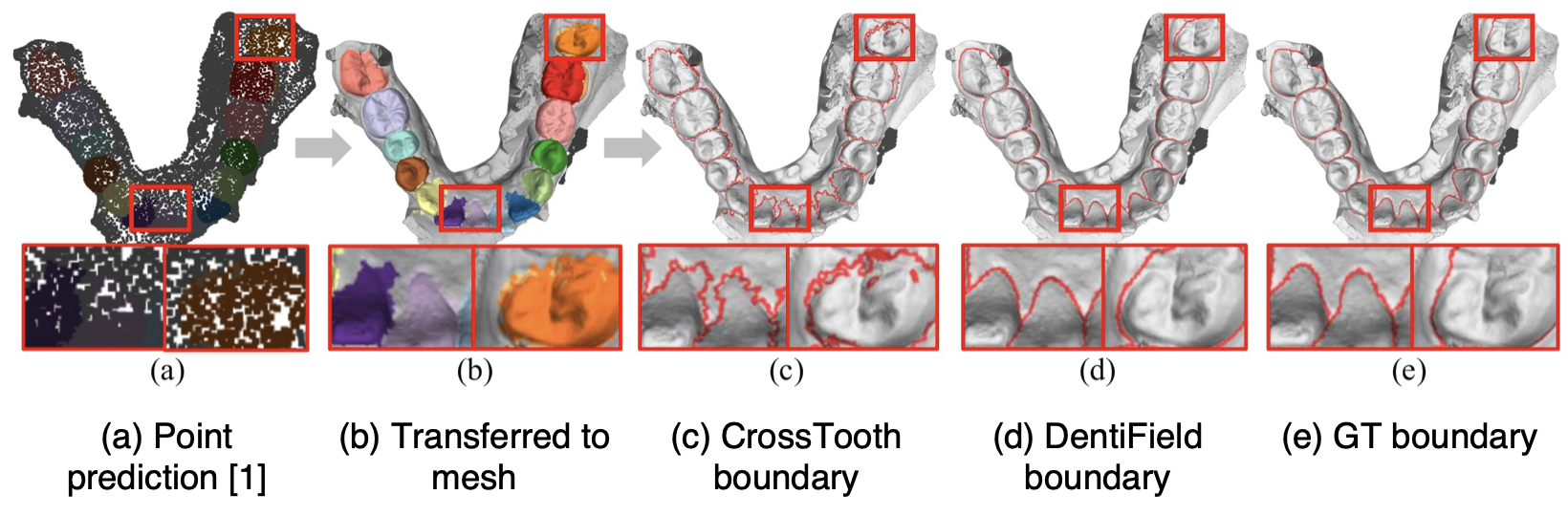
DentiField: Implicit Surface Semantic Field for Intraoral Mesh Segmentation (WACV 2027)
Jaehyeok Shim, Soomin Ham, Kyungdon Joo
DentiField segments intraoral scans by predicting a semantic field directly on the full-resolution mesh surface, instead of propagating point-wise labels to the mesh. We repurpose a pretrained implicit 3D model (TripoSG) as a surface semantic field: the scan is encoded once, and the learned field is queried at any surface coordinate for tooth labels and boundaries. This yields clean boundaries between neighboring teeth and the gingiva, and achieves the best results among compared methods on Teeth3DS+ (87.55% mIoU, 87.50% B-Dice@0.2).
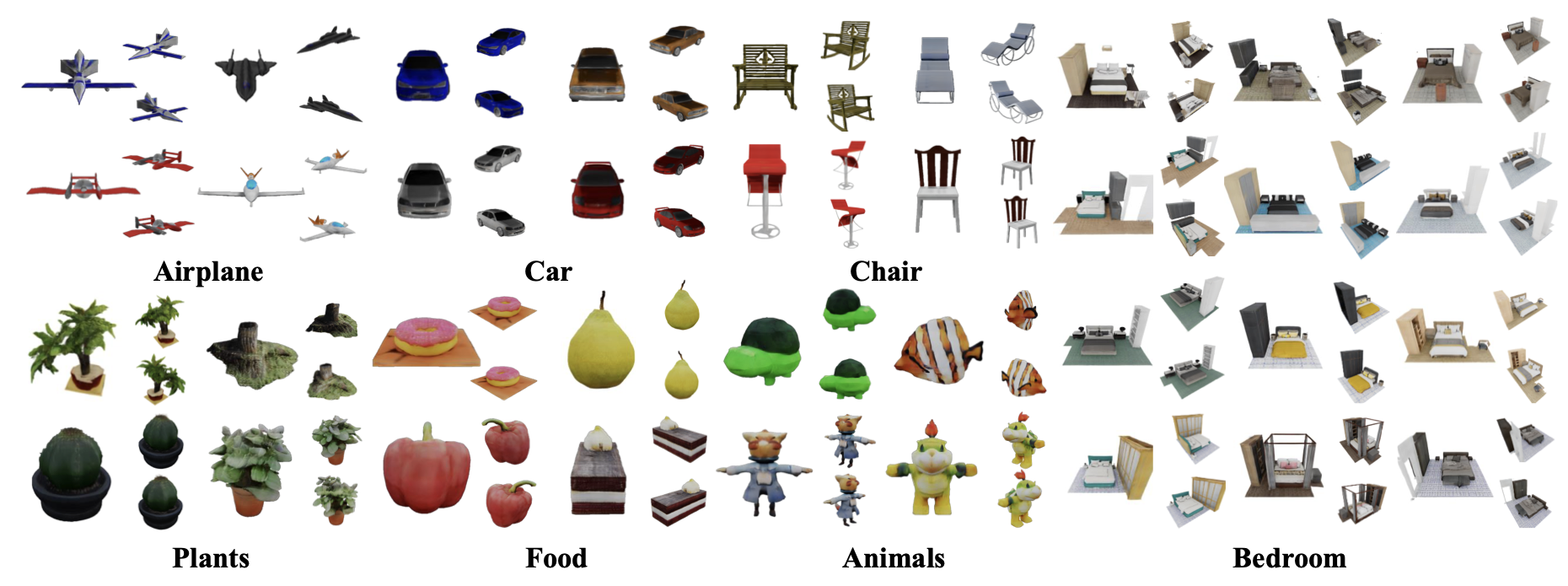
Youngwoo Jeon, Inhyeok Choi, Jaehyeok Shim, Sangjune Park, Kyungdon Joo
Trip-to-Gaussian (Trip2GS) is a versatile unconditional 3D generation framework that scales from objects to scenes by connecting the structured triplane latent with unstructured 3D Gaussian Splatting. A coarse-to-fine scheme first extracts reliable geometric priors from the triplane, using a Gaussian indicator module and surface occupancy fields to generate coarse anchor points. A point upsampling module then densifies them into fine-grained 3D Gaussians that capture detailed geometry and texture. Trip2GS outperforms recent methods in both unconditional object and scene generation.
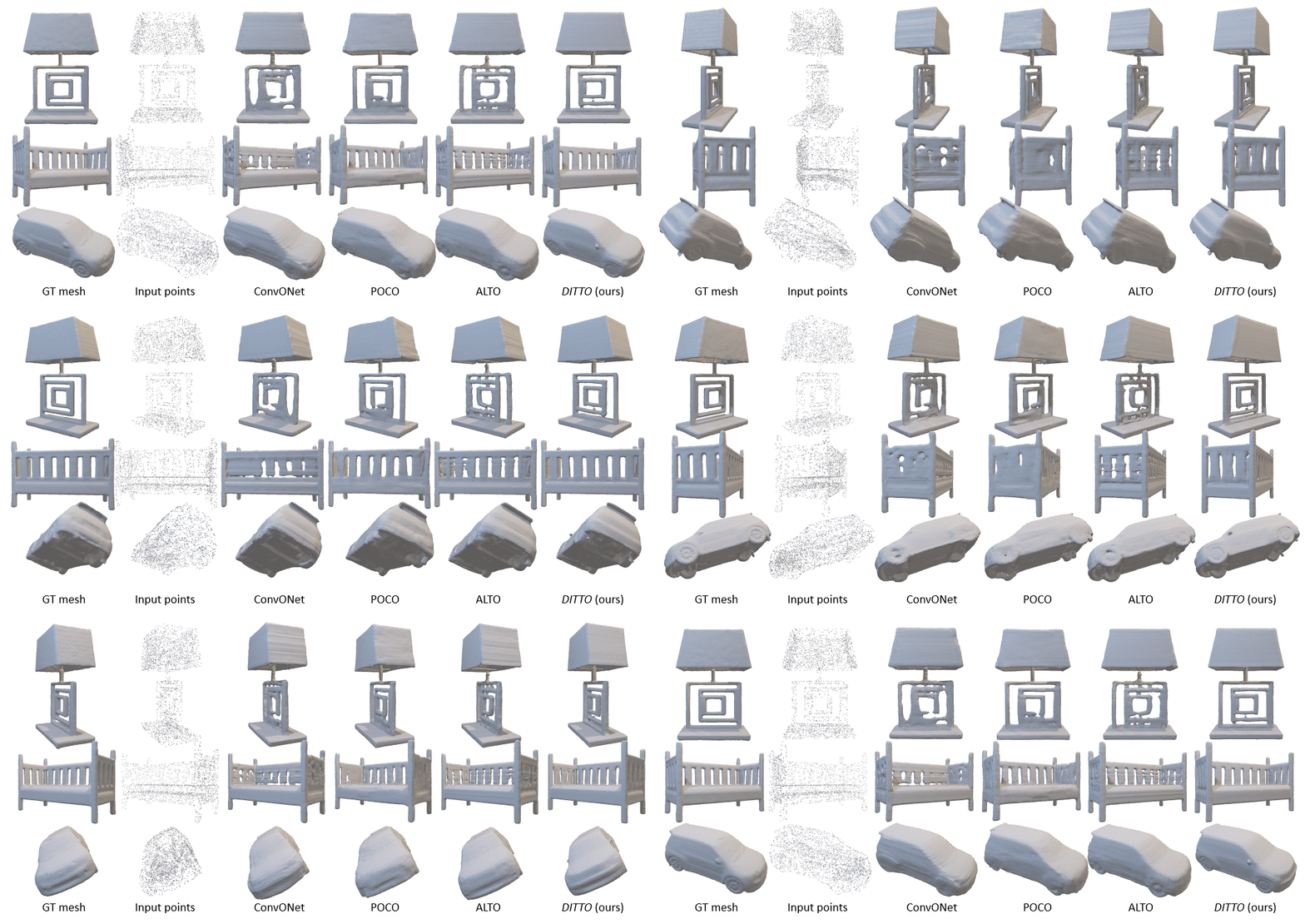
Jaehyeok Shim, Kyungdon Joo
DITTO addresses a crucial task in 3D computer vision: implicit 3D reconstruction from point clouds. DITTO has significantly enhanced 3D understanding ability by leveraging latent features in two modalities: grid and point latents. The core innovation lies in exploiting the complementary synergy between these two types of latents. Our contribution is effectively integration of these two latent types within a network architecture, improving 3D reconstruction performance. Our research holds significant potential for various applications involving implicit fields.
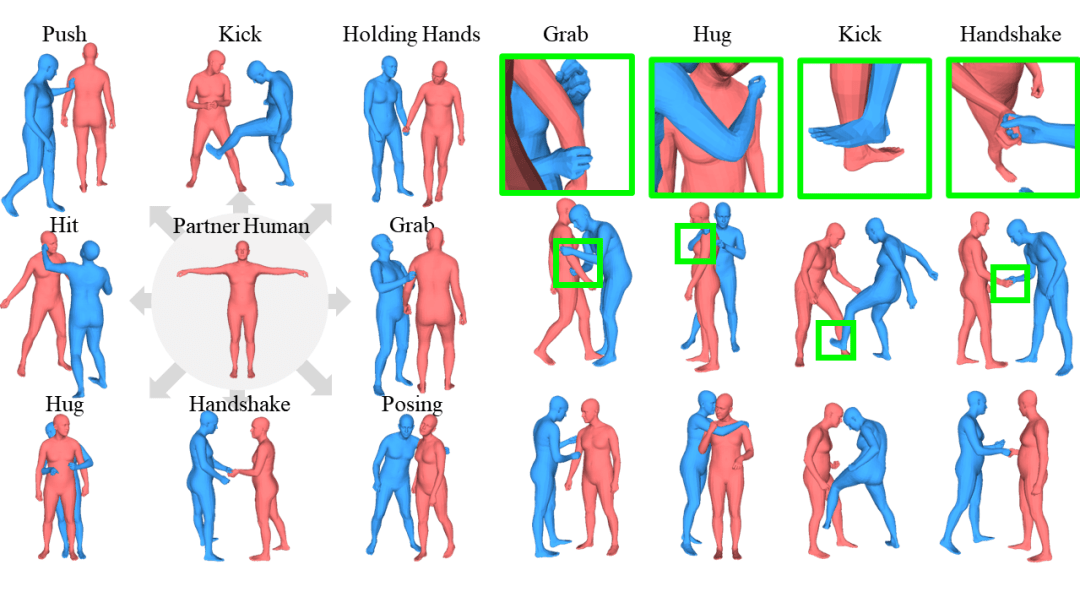
Dongjun Gu, Jaehyeok Shim, Jaehoon Jang, Changwoo Kang, Kyungdon Joo
Contactgen introduces a novel approach for generating 3D human poses that interact realistically with a given another human. We utilize a guided diffusion framework, optimizing human poses to ensure physically plausible interactions. This optimization is based on the predicted contact area determined by the given type of interaction.
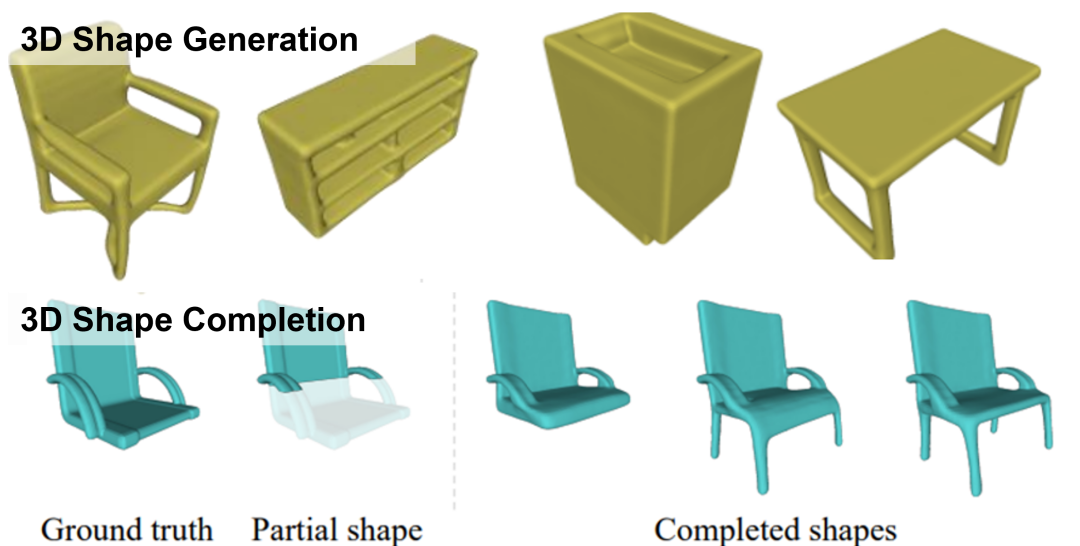
Jaehyeok Shim, Changwoo Kang, Kyungdon Joo
SDF-Diffusion is a 3D shape generation framework using diffusion models and signed distance fields for continuous 3D representations (such as meshes), offering high-resolution shapes in a two-stage process (generation and super-resolution) and demonstrating competitive performance on unconditional and conditional 3D shape generation tasks.
Open Source Contributions
mesh2sdf-triton (2026)
GPU-only, differentiable mesh-to-SDF library derived from Mesh2SDF, implemented with PyTorch and Triton. Besides the NumPy-compatible API, compute_triton returns an SDF connected to the PyTorch autograd graph, so gradients flow to the mesh vertices for SDF-based fitting and optimization.
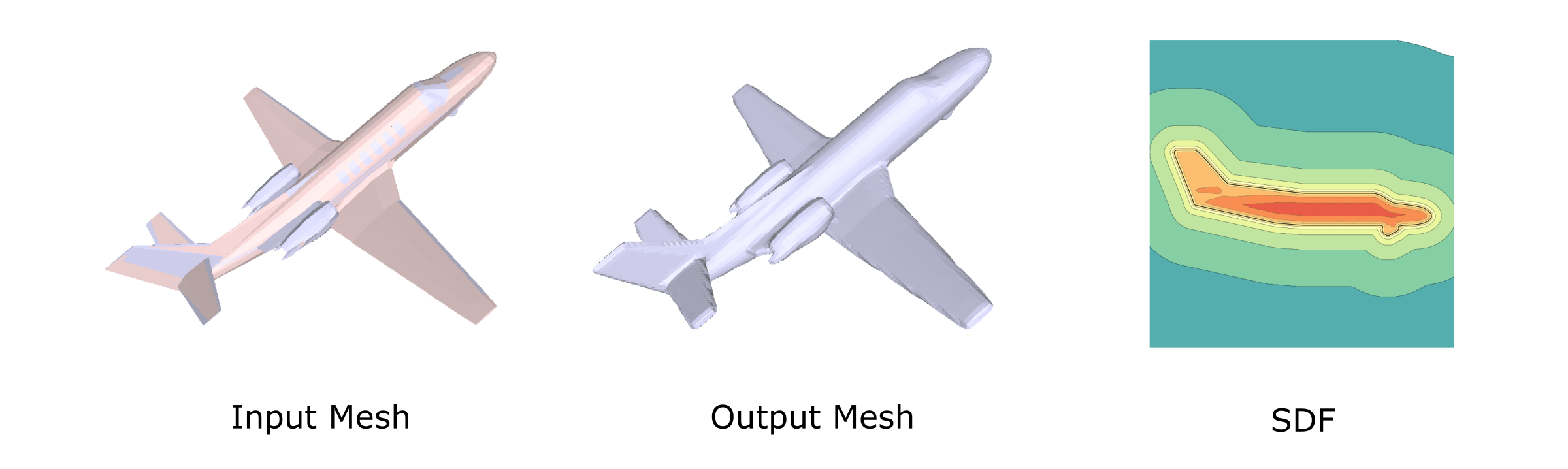
| Faces | Mesh2SDF (CPU) | Ours (GPU) | Speedup |
|---|---|---|---|
| 236 | 8.02 s | 0.236 s | 34.0x |
| 5,120 | 8.66 s | 0.238 s | 36.4x |
| 51,748 | 8.46 s | 0.238 s | 35.6x |
| 332,820 | 10.82 s | 0.248 s | 43.7x |
kitsu (2023 - Present)
Code stack of Pytorch boilerplate codes including a DDP-based trainer similar to pytorch-lightning.
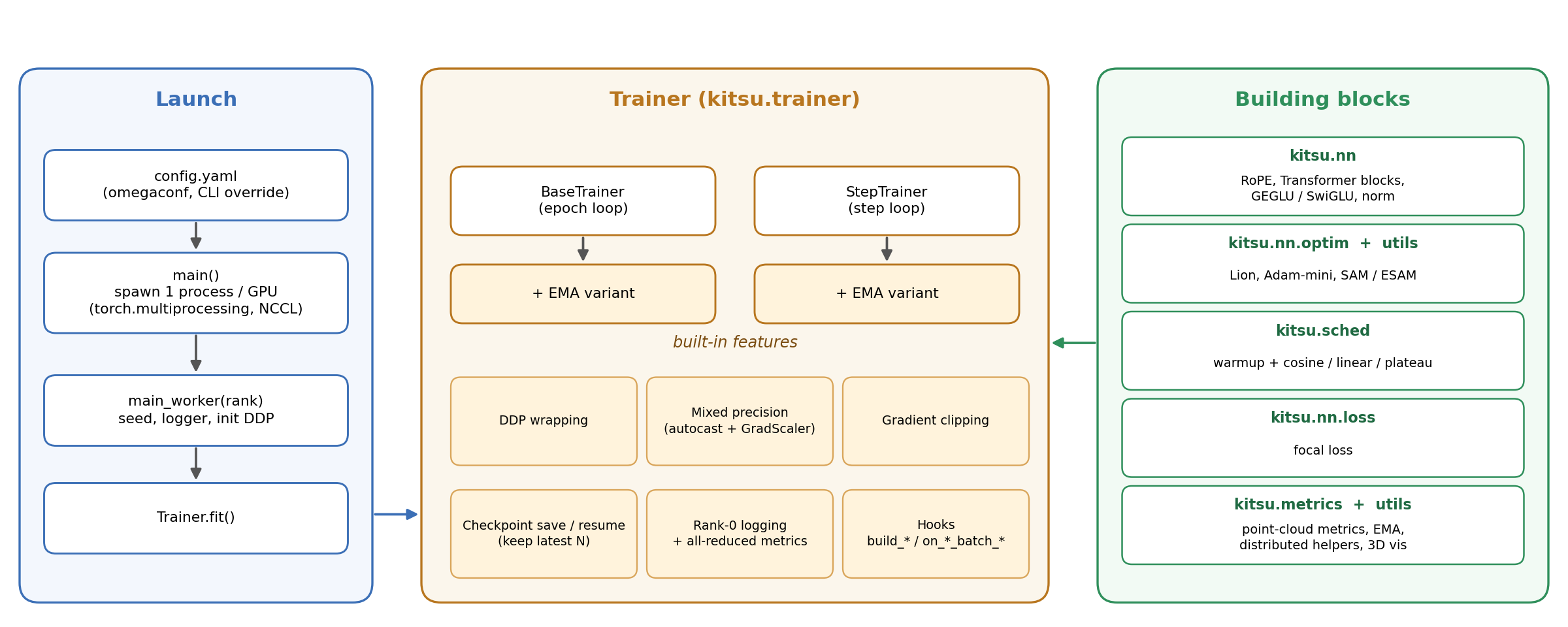 Overview: launch flow, trainer classes with built-in features, and reusable building blocks.
space-filling-pytorch (2024)
Library for Space Filling Curve (e.g., Hilbert-Curve, Z-Order) implementations based on Triton.
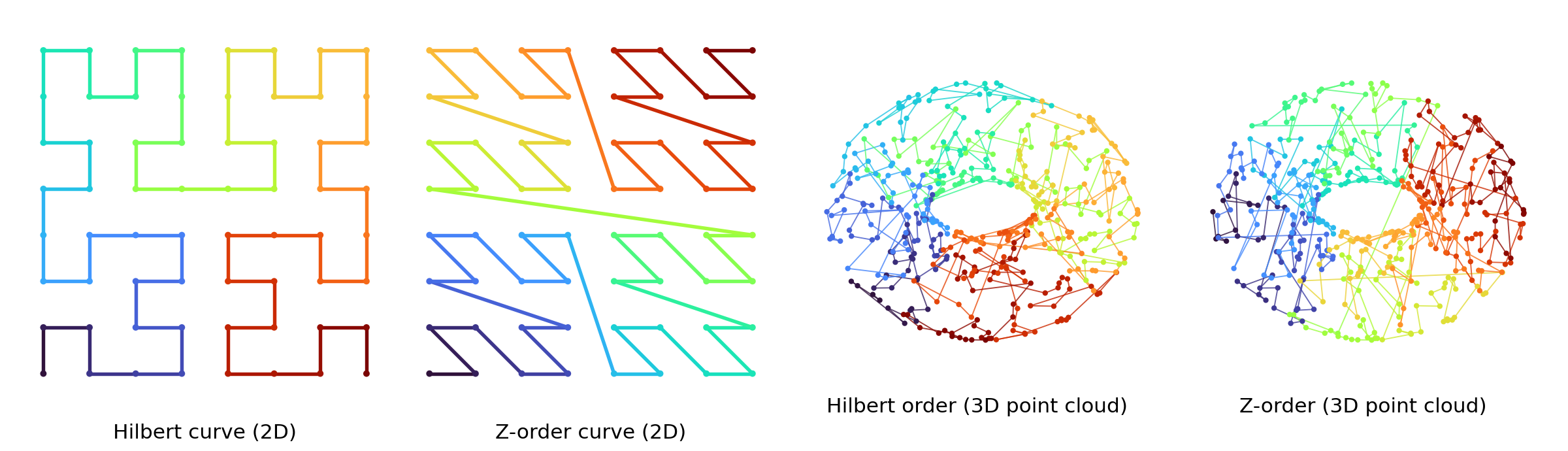 Illustration of the curve orderings: 2D curves (left) and a 3D point cloud sorted by Hilbert / Z-order code and colored by sorted position (right). The 3D codes follow the library's algorithm.
fast-GeM (2024)
Generalized Mean Pooling (GeM) implementation using Triton.
GEGLU-triton (2024)
Triton implementation of GEGLU.